

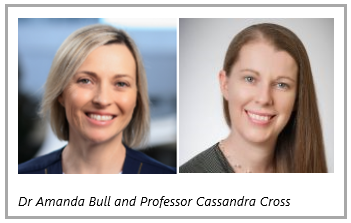
Researchers from QUT Centre for Justice have been looking closely at the cost of Christmas – and the risks that different consumer groups need to be aware of.
QUT Centre for Justice Consumer Credit at Christmas Briefing Paper Series
QUT Centre for Justice member, Dr Amanda Bull, led a QUT Centre for Justice Briefing Paper Series on Consumer Credit at Christmas. The Briefing Paper series – short (2000 words), peer-reviewed accounts of topics and issues related to justice – featured those researching in the areas of consumer credit, financial literacy and hidden debt to showcase the depth and breadth of our work in this area.
This research was featured in a number of media campaigns over the Christmas period and Amanda was interviewed by ABC Radio Sydney, Melbourne, Hobart, Brisbane and Perth as well as Radio 2CC and ABC NewsRadio.
Amanda discussed some of the key themes from these papers:
“Christmas is often portrayed as a moment of joy, but it can also expose and deepen existing financial stress,” Dr Bull said.
“For many households and small businesses, credit becomes a way to cope and that reliance can have serious consequences well into the new year.”
Among the QUT-authored papers is No New Home for Christmas, which examines Australia’s residential construction insolvency crisis and its impact on consumers hoping to have homes built by the festive season.
Other papers explore the role of community finance models in promoting financial justice, reforms to financial hardship protections in consumer credit law, and the financial experiences of culturally and linguistically diverse young adults navigating complex systems often filled with technical jargon.
“Many of these pressures don’t exist in isolation,” Dr Bull said.
“A young person struggling to understand financial products, a family dealing with post-Christmas debt, or a small business managing seasonal cash-flow volatility are all operating within systems that were not designed with their lived experience in mind.”
The QUT Centre for Justice Consumer Credit Series included the following papers:
Amanda Bull from QUT Law School and Michael Murray, a Research Affiliate at University of Sydney Law School wrote about Seasonal financial distress: Not just a tough time for consumers? – about reform options that better reflect small business realities.
QUT’s Lyndall Bryant, Elizabeth Streten, Morgan O’Neill, Amanda Bull, Fiona Cheung and Jessica Thiel wrote No New Home for Christmas: Consumers and Australia’s Residential Construction Insolvency Crisis – about the persistently high rates of insolvency threating the housing supply chain.
Laura De Zwaan, Deanna Grant-Smith and Elisabeth Sinnewe wrote that Finance should be simple not stressful: The financial experiences of culturally and linguistically diverse young adults in Australia – reflecting findings and recommendations from a study on the personal finance experiences of young adults from culturally and linguistically diverse backgrounds.
Denise Gibran Nogueira wrote about Revisiting community finance: lessons from socio-solidarity economies to promote financial justice – discussing the role of community finance in addressing community and individual needs and offers recommendations to strengthen these models in pursuit of social and financial justice.
Nicola Howell wrote about Improving financial hardship protections in consumer credit: processes, outcomes and options – discussing the hardship provisions available to consumers but also about the need to improve these protections and provide consumers a great range of options.
University of Melbourne researcher Dr Lucie O’Brien wrote about Regulating buy-now-pay-later under Australia’s consumer credit laws: A new era for ‘new money’ – addressing the laws relating to buy-now-pay-later as a form of consumer credit – and whether these go far enough to prevent consumer harm.
Finally, Alice Brennan, Head of Innovation at Sefa Partnerships provided a practitioner perspective with a Practitioner Paper titled, Project Daffodil: Building emotional financial literacy to reduce homelessness risks in older women – based on research conducted with Sefa, Latitude and Housing Choices. This research found that culturally relevant, nonstigmatising storytelling can build emotional financial literacy, motivating capable older women to overcome avoidance and improve their financial and housing security.
Professor Cross provided a number of ways that people can reduce their risk of becoming a victim.
Professor Cross was interviewed on Radio 2CC, Radio 6PR.
Professor Cross also wrote for Inside Small Business and wrote a piece for The Conversation, featured in QUT Real Focus.
Read more about Professor Cassandra Cross’ research here.



Comments are closed.